

Most people picture pews, aisles, and a quick vacuum when they think about church cleaning. In practice, church cleaning checklists go well beyond the main hall because the rest of the building carries the everyday workload of a busy Australian parish.
They also help teams stay consistent across midweek playgroups, Sunday services, weddings, funerals, and community hires. Done well, church cleaning checklists clarify what “clean” looks like in every room, not just the visible ones.
What do church cleaning checklists include for entryways, foyers, and welcome desks?
They usually start at the front door because first impressions are formed before anyone sits down. Church cleaning checklists often prioritise glass, touchpoints, and floor safety in these high-traffic zones.
Common tasks include wiping handles and push plates, cleaning glass doors, dusting brochure racks, sanitising EFTPOS terminals, and spot-cleaning fingerprints on painted walls. In Australia, they often add mat shaking or vacuuming to reduce tracked-in grit and leaf litter after windy days.
What do church cleaning checklists cover in bathrooms and parent rooms?
They focus on hygiene, odour control, and restocking because these spaces get judged fast. Church cleaning checklists typically break bathrooms into fixtures, touchpoints, and consumables.
They often include disinfecting toilets, taps, and change tables, cleaning mirrors, emptying sanitary bins, scrubbing floors and grout lines, and refilling soap, paper towel, and toilet paper. Parent rooms usually add wipe-downs for nursing chairs, bottle prep areas, and nappy disposal systems.
What do church cleaning checklists address in kitchens, servery areas, and tea stations?
They target food safety basics and the small details that cause complaints. Many church cleaning checklists include both “after use” and “weekly deep clean” steps for church kitchens.
Typical items include sanitising benches, wiping cupboard fronts, cleaning fridges (including expired items), degreasing splashbacks, disinfecting handles, and cleaning microwaves and kettles. Tea stations often add descaling, emptying drip trays, and cleaning around urns where sticky spills build up.
What do church cleaning checklists include for meeting rooms, offices, and counselling spaces?
They usually emphasise dusting, privacy, and a calm feel because these rooms host sensitive conversations. Church cleaning checklists often treat them like small workplaces.
Tasks can include wiping desks and chair arms, disinfecting shared phones, cleaning keyboards on hot desks, emptying confidential waste bins where used, and vacuuming edges where dust gathers. In Australian churches with volunteer admin teams, checklists often include a simple “reset” so rooms are ready for the next user.
What do church cleaning checklists cover in children’s ministry rooms and creches?
They focus on germs, soft furnishings, and toy rotation because little hands touch everything. Church cleaning checklists usually separate daily wipe-downs from scheduled deep cleaning.
They commonly include disinfecting hard toys, laundering dress-ups and cushions, wiping shelves and plastic tubs, cleaning highchairs, and sanitising door handles at child height. Many also specify approved products that are safe for kids, plus clear steps for dealing with bodily fluid spills.
What do church cleaning checklists address in nurseries, playgroups, and community program areas?
They cover the practical mess that comes from weekday use, not just Sunday services. Church cleaning checklists often add extra attention to floors, bathrooms nearby, and bin management in these spaces.
They may include mopping after craft activities, removing stickers or blu-tack from tables, cleaning pram parking zones, and disinfecting shared equipment like play mats. In Australian community hubs, checklists often include a quick check of exit paths and accessibility ramps after busy sessions. Check out more about Waste and recycling.
What do church cleaning checklists include for altars, sanctuaries, and worship platforms?
They usually protect delicate finishes while keeping everything presentable for services and ceremonies. Good church cleaning checklists specify gentle methods rather than “one product for everything.”
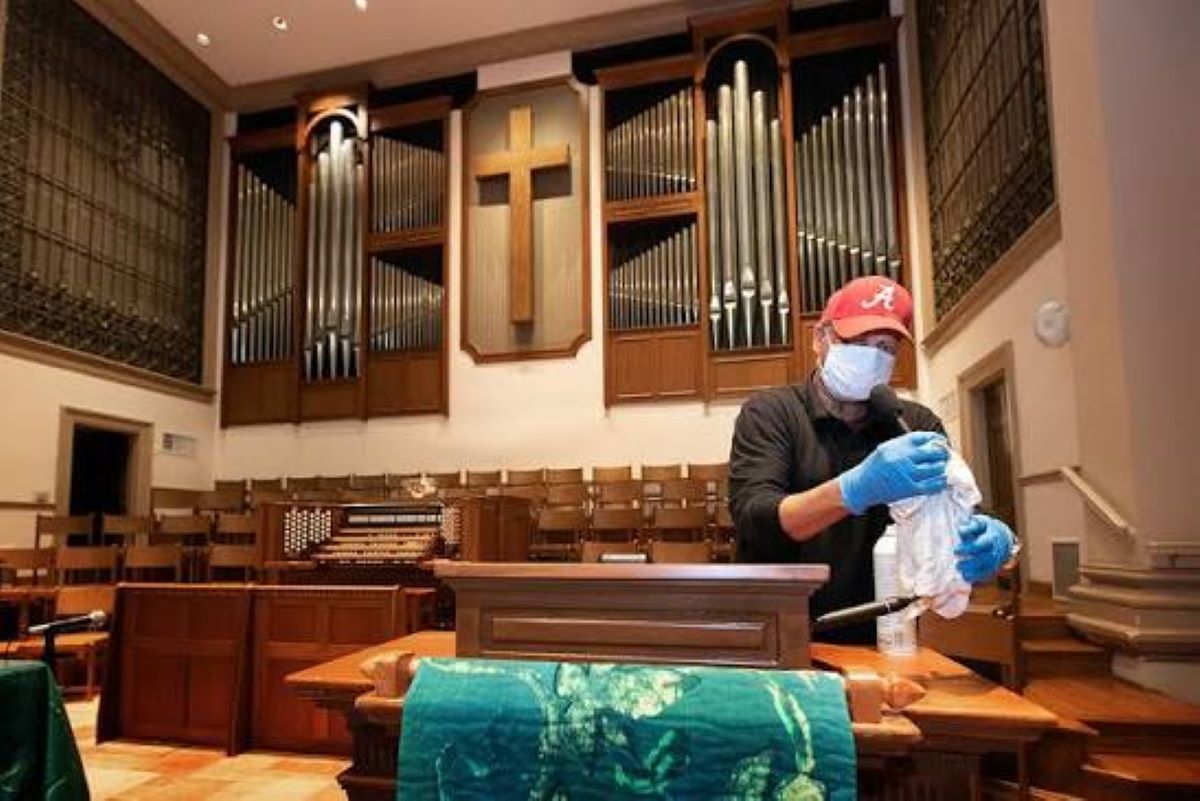
Items can include dusting lecterns, wiping communion rails, cleaning polished timber, vacuuming around kneelers, and removing wax drips where safe. They often include careful handling instructions for microphones, music stands, and cable runs to avoid damage and reduce trip risks.
What do church cleaning checklists cover for musical instruments, AV gear, and tech booths?
They mainly focus on dust control and safe touchpoint cleaning. Many church cleaning checklists include “do not wet” warnings and clearly list what can be wiped.
Common actions include dusting speakers and stands, wiping remote controls, disinfecting handheld mics, and cleaning headset packs externally. Tech booths often add screen dusting, vacuuming floor corners, and keeping vents clear so equipment runs reliably during summer heat in Australia.
What do church cleaning checklists include for floors, carpets, and hard surfaces throughout the building?
They prioritise safety and appearance because floors show wear first. Church cleaning checklists usually specify different methods for carpet, vinyl, tiles, and timber.
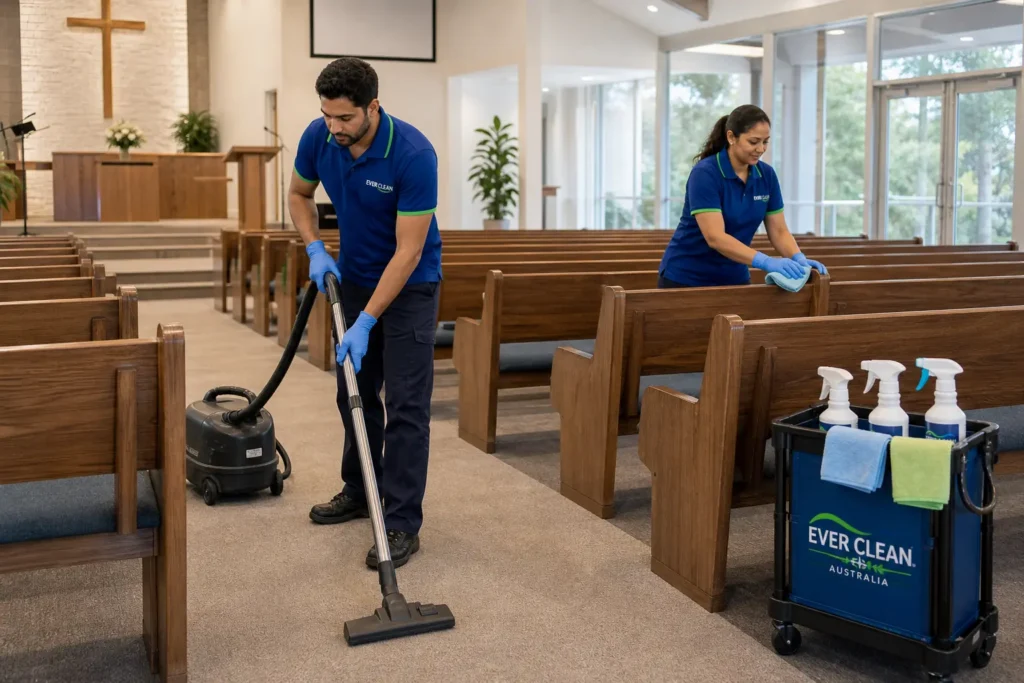
They can include daily vacuuming in traffic lanes, spot treatment for candle wax or chewing gum, damp mopping with neutral cleaner, and periodic machine scrubs for tiled areas. Many also include entry mat schedules, which matter in Australian coastal areas where sand gets tracked in.
What do church cleaning checklists cover in storage rooms, cupboards, and behind-the-scenes areas?
They stop clutter from becoming a safety hazard and a pest attractant. Church cleaning checklists often include these spaces because they quietly affect everything else.
Typical tasks include sweeping, removing cobwebs, checking for spills, keeping chemicals labelled, and ensuring nothing blocks switchboards or emergency exits. Australian churches that store event gear often add a simple “stack and label” rule so volunteers can find chairs, trestles, and banners quickly.
What do church cleaning checklists include for outdoor areas, car parks, and entrances?
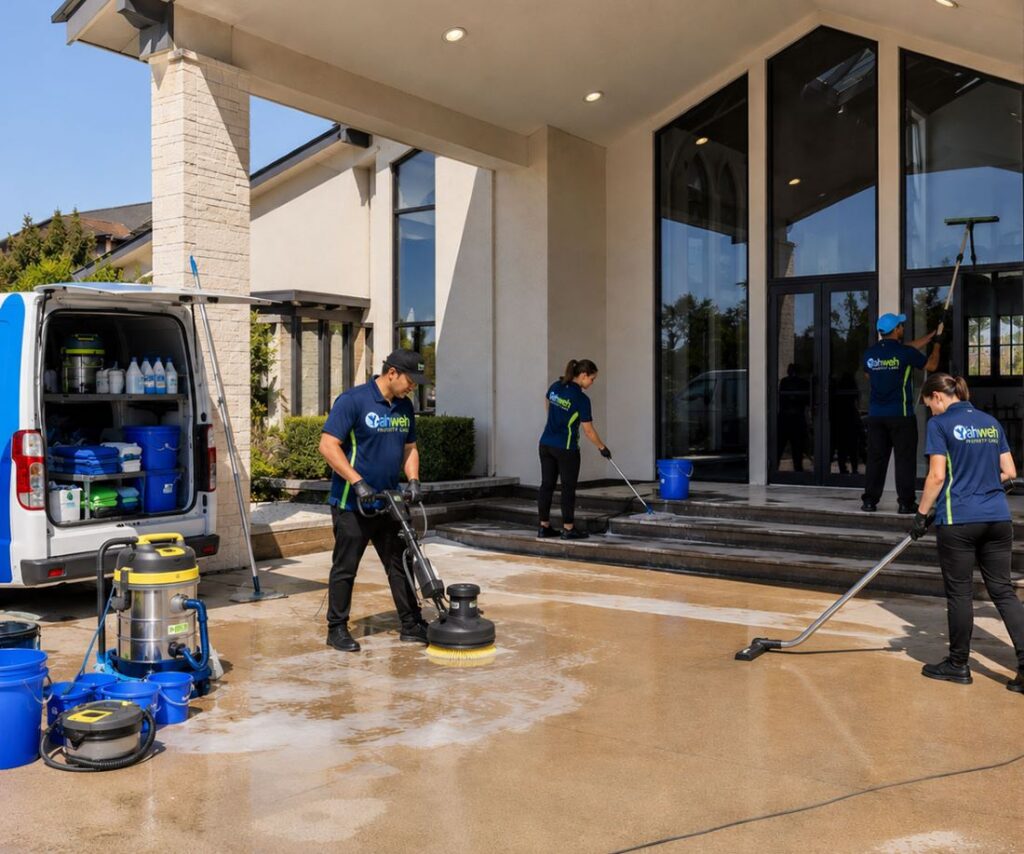
They address litter, slip risks, and presentation around the property line. Many church cleaning checklists extend outside because hirers and neighbours see those areas first.
They may include sweeping verandas, clearing leaves from paths, checking drains after heavy rain, wiping outdoor signage, and emptying external bins. In bushfire-prone Australian regions, some add seasonal clearing around doors and air intakes to reduce ember risk and improve airflow.
What do church cleaning checklists cover for waste, recycling, and odour control?
They prevent smells and pests, especially after weekend events and catered functions. Church cleaning checklists often specify bin liners, pickup points, and who moves waste to the main collection area.
Tasks can include sanitising bin lids, cleaning spill trays, separating recycling, and deodorising problem spots like under-sink cupboards. For Australian churches hosting sausage sizzles or shared lunches, checklists often include an extra run on food-waste bins to avoid lingering odours.
What do church cleaning checklists include for infection control and high-touch points?
They reduce illness spread during flu season and after large services. Good church cleaning checklists list the touchpoints people forget.
These often include door handles, railings, light switches, lift buttons, chair backs, taps, and shared pens at welcome desks. Many Australian sites also include hand-sanitiser station checks, plus clear instructions on dwell time for disinfectants so products work as intended.
What do church cleaning checklists cover for special events like weddings, funerals, and Christmas services?
They usually add setup resets, extra bathrooms, and a faster turnaround standard. Church cleaning checklists often include event-specific add-ons so nothing is missed under pressure.
They may cover confetti control, flower petal removal, extra glass and mirror cleaning, and more frequent bathroom refreshes. Christmas and Easter often add candle wax checks, overflow bin plans, and quick spot-clean routines between back-to-back services.
What do church cleaning checklists include for compliance, safety, and reporting in Australia?
They support safer workplaces for staff and volunteers and help document issues early. Many church cleaning checklists include a simple sign-off section and a place to note hazards.
They can prompt checks for wet-floor signage, safe chemical storage, and reporting of broken tiles, loose rails, or leaking taps. In Australian settings, they also help align cleaning routines with site-specific WHS expectations without turning the process into paperwork.
What do church cleaning checklists miss if they only focus on the main hall?
They miss the spaces where problems start, like bathrooms, kitchens, and storage zones. Church cleaning checklists work best when they reflect how the building is actually used across the week.
When teams clean beyond the main hall, they reduce complaints, improve safety, and protect the church’s reputation with hirers and the local community. The result is a building that feels cared for everywhere, not just where people sit on Sunday.
